Your Neighbor’s Roof Was Covered.
Was Yours?
AskQ Home Solutions is a licensed and bonded Illinois public adjuster firm
representing property owners during insurance claims.
Increase and protect your property value
Protect one of your largest investments
Protect your home and the people in it
Avoid paying out of pocket for damage your insurance may cover
Prevent small issues from turning into costly repairs or coverage problems
Insurance companies have adjusters.
Property owners should too.
Takes 30 seconds. No obligation. No cost if denied.
Your Neighbor’s Roof Was Covered.
Was Yours?
AskQ Home Solutions is a licensed and bonded Illinois public adjuster firm representing property owners during insurance claims.
Increase and protect
your property value
Protect one of your
largest investments
Protect your home and
the people in it
Avoid paying out of pocket for damage your insurance may cover
Prevent small issues from turning into costly repairs or coverage problems
Insurance companies have adjusters.
Property owners should too.
Takes 30 seconds. No obligation. No cost if denied.
Are You At a Disadvantage?
Most property owners are — without realizing it.
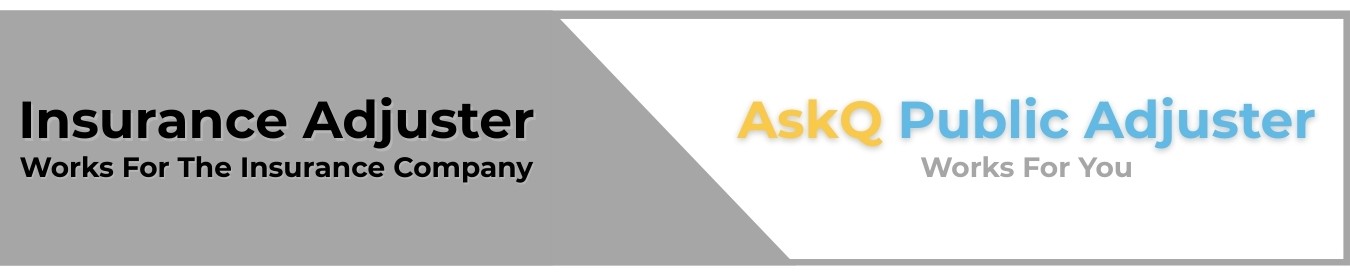
By definition, an insurance adjuster does not work on behalf of the property owner.
They are contracted by the insurance company to evaluate the claim in the company’s interest.
That’s not a flaw — that’s how the system works.
But it means the property owner does not have someone representing their side by default.
Filing an Insurance Claim Without Representation Is Like Going to Court Without a Lawyer
Most property owners assume the insurance company sends someone to help them.
But that adjuster represents the insurance company — not the property owner.
That doesn’t make it wrong.
It just means you're navigating the claim without someone representing your side.
And most people don’t realize what their policy actually covers until it’s already decided.
Are You At a Disadvantage?
Most property owners are — without realizing it.
By definition, an insurance adjuster does not work on behalf of the property owner.
They are contracted by the insurance company to evaluate the claim in the company’s interest.
That’s not a flaw — that’s how the system works.
But it means the property owner does not have someone representing their side by default.
Filing an Insurance Claim Without Representation Is Like Going to Court Without a Lawyer
Most property owners assume the insurance company sends someone to help them.
But that adjuster represents the insurance company — not the property owner.
That doesn’t make it wrong.
It just means you're navigating the claim without someone representing your side.
And most people don’t realize what their policy actually covers until it’s already decided.
How It Works



Qualify
Fill out a quick form to check if
your property has experienced qualifying storm activity.
Most property owners don’t realize their address may already qualify.
No contract.
No payment required.
Takes about 30 seconds.
Pre-Inspect
We inspect the property to identify damage that may support a claim.
Here’s what surprises most homeowners:
Storm damage isn’t always obvious.
A roof can have: lifted shingles, hail impact fractures, weakened seals, water intrusion starting beneath the surface
And none of it may be visible from the driveway. That’s why many claims are missed entirely.
Claim
Once the pre-inspection confirms you have a valid reason for a claim, we take over the process from there.
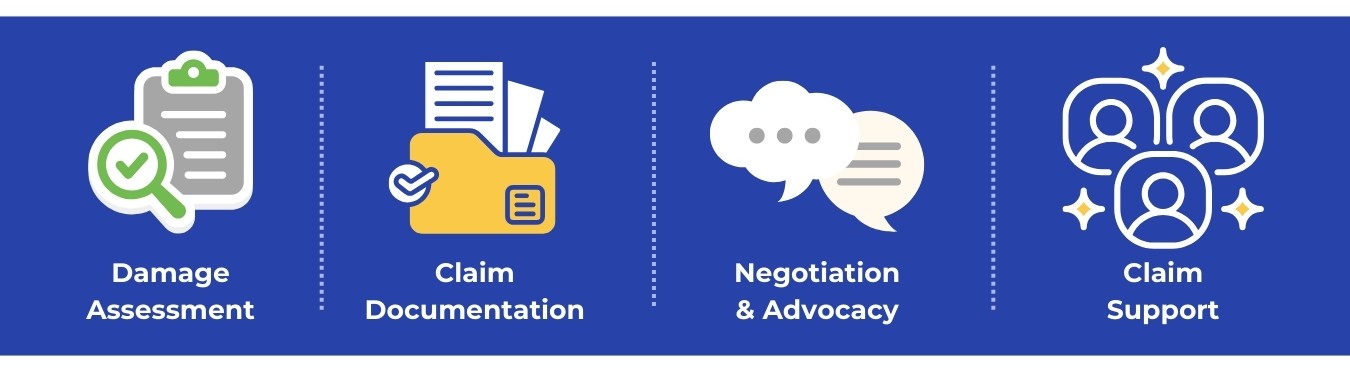
We handle the documentation, review the damage, and go through the insurance estimate to make sure the claim reflects the actual condition of the property.
You stay in control of the decisions — we handle the complexity.
Claim is not approved? No Fee.
It only takes a minute to see if your home qualifies.
Click below and request a quick inspection.
One of our team members will check your property and explain what we see.
How It Works
Qualify
Fill out a quick form to check if
your property has experienced qualifying storm activity.
Most property owners don’t realize their address may already qualify.
No contract.
No payment required.
Takes about 30 seconds.
Pre-Inspect
We inspect the property to identify damage that may support a claim.
Here’s what surprises most homeowners:
Storm damage isn’t always obvious.
A roof can have: lifted shingles, hail impact fractures, weakened seals, water intrusion starting beneath the surface
And none of it may be visible from the driveway. That’s why many claims are missed entirely.
Claim
Once the pre-inspection confirms you have a valid reason for a claim, we take over the process from there.
We handle the documentation, review the damage, and go through the insurance estimate to make sure the claim reflects the actual condition of the property.
You stay in control of the decisions — we handle the complexity.
Claim is not approved? No Fee.
It only takes a minute to see if your home qualifies.
Click below and request a quick inspection.
One of our team members will check your property and explain what we see.
How AskQ Helps Property Owners
Types of Claims We Handle
Storm damage claims have time limits.
If your property experienced the last storm…
It’s worth taking a quick look.
The Risk of Doing Nothing
Pay for storm damage out of pocket — when it could have been covered.
Small damage doesn’t stay small — it turns into mold, water damage, and structural problems.
Unresolved damage can be seen as neglect — putting future coverage at risk.
Why would insurance pay for my neighbor’s roof — but not mine?
Storm damage can affect homes differently, even within the same neighborhood.
Insurance approvals are often based on how the damage is documented, presented, and evaluated during the inspection process.
Many property owners assume a single inspection tells the full story. In reality, missed damage or incomplete documentation can affect the outcome of a claim.
A public adjuster represents the property owner’s side of the claim, helping ensure the damage and scope of repairs are properly evaluated.
My roof looks fine. Isn’t that enough?
Not always.
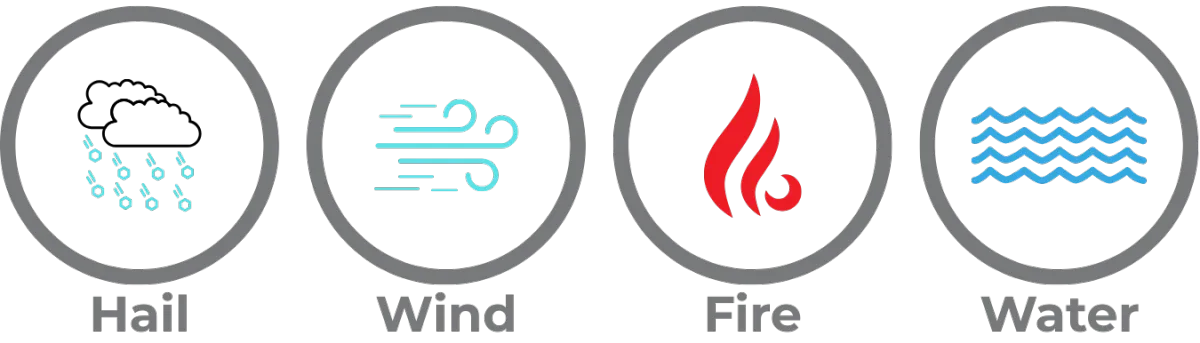
Storm damage — especially from hail or wind — is often not obvious from the ground.
Many roofs that appear fine still have damage that only becomes visible during a professional inspection.
Insurance companies frequently approve claims for damage that property owners didn’t initially notice.
How long does the process take?
Every claim is different, but most follow a similar timeline:
1. Property inspection and documentation
2. Insurance adjuster meeting
3. Claim decision from the insurance company
From inspection to claim decision, the process typically takes several weeks depending on the insurer and the scope of the claim.
If repairs are approved, the restoration timeline depends on the contractor schedule and project scope.
I already filed a claim and was denied. Can it be reviewed again?
Sometimes, yes.
Claim decisions are often based on the documentation and inspection performed at the time of the claim. If important damage was missed or not fully documented, additional review may be possible.
A public adjuster can review the documentation, policy coverage, and claim file to determine whether additional options may exist.
Does filing a claim automatically raise my premium?
No single claim automatically raises your premium.
Insurance companies determine rates using many factors including regional storm activity, claim history, and overall risk in an area.
Many homeowners see premium adjustments after large storm seasons even if they never file a claim.
If storm damage exists, insurance coverage is designed to help restore the property.
The Risk of Doing Nothing
Pay for storm damage out of pocket — when it could have been covered.
Small damage doesn’t stay small — it turns into mold, water damage, and structural problems.
Unresolved damage can be seen as neglect — putting future coverage at risk.
Why would insurance pay for my neighbor’s roof — but not mine?
Storm damage can affect homes differently, even within the same neighborhood.
Insurance approvals are often based on how the damage is documented, presented, and evaluated during the inspection process.
Many property owners assume a single inspection tells the full story. In reality, missed damage or incomplete documentation can affect the outcome of a claim.
A public adjuster represents the property owner’s side of the claim, helping ensure the damage and scope of repairs are properly evaluated.
My roof looks fine. Isn’t that enough?
Not always.
Storm damage — especially from hail or wind — is often not obvious from the ground.
Many roofs that appear fine still have damage that only becomes visible during a professional inspection.
Insurance companies frequently approve claims for damage that property owners didn’t initially notice.
How long does the process take?
Every claim is different, but most follow a similar timeline:
1. Property inspection and documentation
2. Insurance adjuster meeting
3. Claim decision from the insurance company
From inspection to claim decision, the process typically takes several weeks depending on the insurer and the scope of the claim.
If repairs are approved, the restoration timeline depends on the contractor schedule and project scope.
I already filed a claim and was denied. Can it be reviewed again?
Sometimes, yes.
Claim decisions are often based on the documentation and inspection performed at the time of the claim. If important damage was missed or not fully documented, additional review may be possible.
A public adjuster can review the documentation, policy coverage, and claim file to determine whether additional options may exist.
Does filing a claim automatically raise my premium?
No single claim automatically raises your premium.
Insurance companies determine rates using many factors including regional storm activity, claim history, and overall risk in an area.
Many homeowners see premium adjustments after large storm seasons even if they never file a claim.
If storm damage exists, insurance coverage is designed to help restore the property.